←
→
3mm thick fry pan

7 Benefits of Using a 3mm Thick Fry Pan for Everyday Cooking

My aunt’s kitchen in Pune has pans that look like they survived a war. Black at the bottom, handle a bit loose, and dents everywhere. And her sabzi never sticks. Never.

Mine burns every second day. Same dal, same masala, same gas. So I asked her the secret, and she just pointed at the pan and said, “Mota hai na.”

Thick. That’s the whole secret. Later I found out it was basically a 3mm thick fry pan, and I’ve been a little obsessed since.

Here’s what I noticed. Not in proper order, so don’t mind.

So what does 3mm even mean

It’s the thickness of the metal. About three millimeters, usually at the base, sometimes on the walls too. Depends on the brand, and sellers are not always honest about it.

Cheap pans are way thinner. 1 mm, 1.5 mm, I’m guessing. Press the side of a thin one, and it flexes like a tin plate. A thick one doesn’t.

You can feel it in two seconds. It’s heavy in the hand.

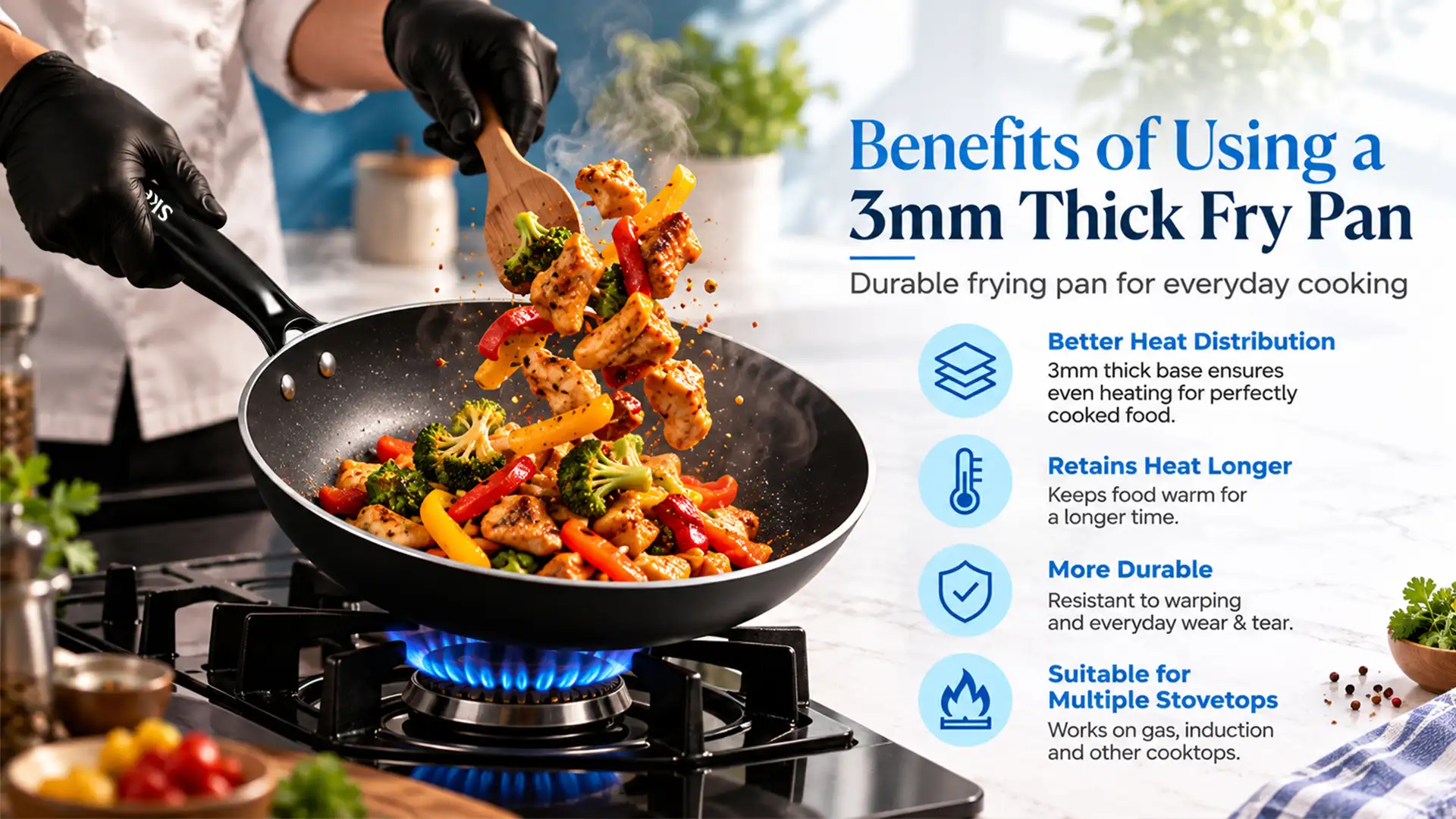
Heat spreads out (benefit one, I guess)

In a thin pan, the middle gets crazy hot, and the edges stay lazy. Your paratha is burnt in the centre and raw near the side. Morning mood gone.

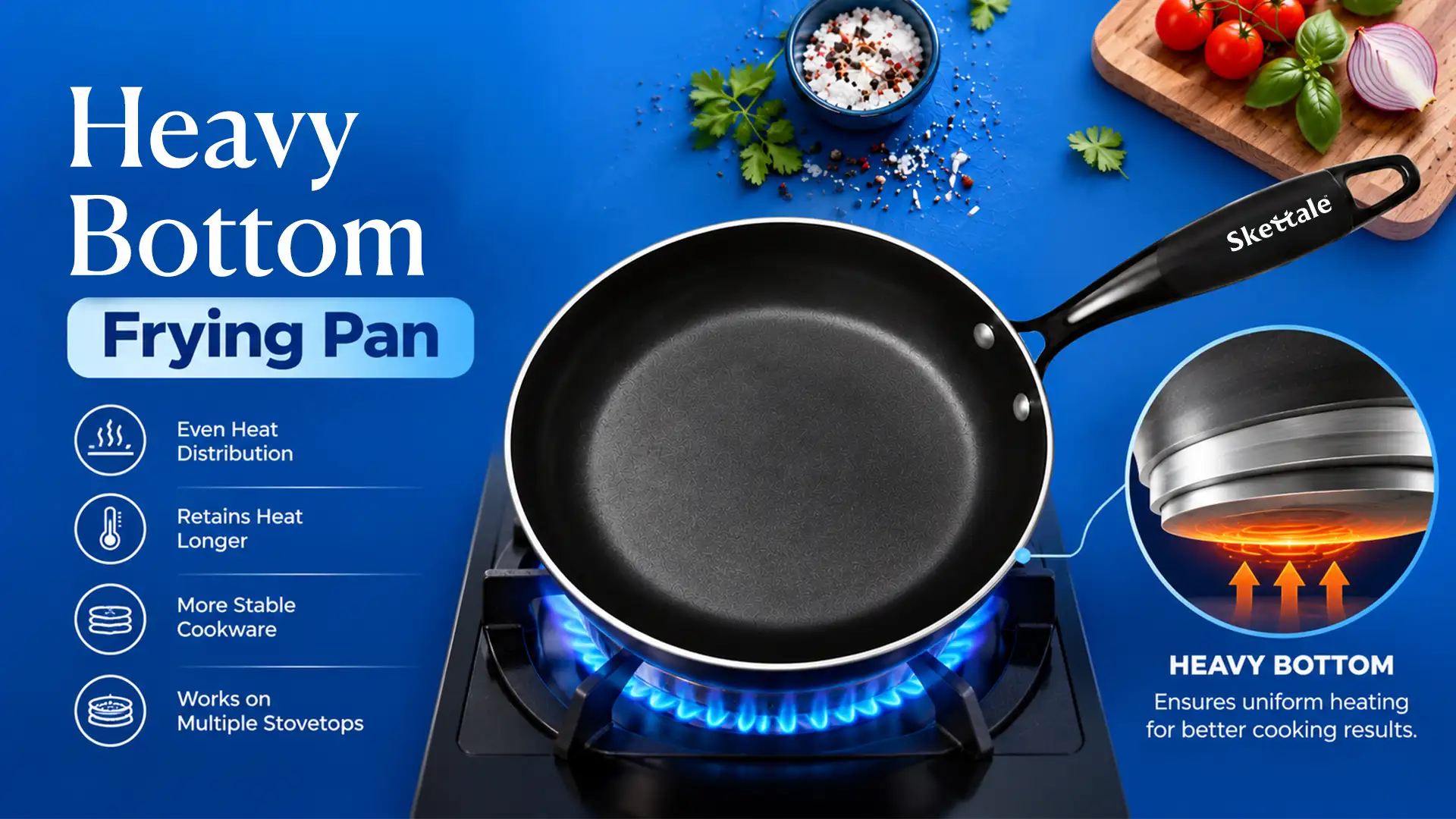
A thicker base carries the heat across before it reaches your food. Not perfectly; nothing is perfect, but much better.
fry pan

Fewer burnt bottoms

This is related to the first one, but I’ll say it anyway.

Tadka, onions, and jeera, all of it burns in seconds on a thin pan. You turn around to pick up the haldi, and it’s already black.

A heavy bottom frying pan gives you a few extra seconds. That’s all it does. But those seconds are the difference between a nice sabzi and “just add more water, nobody will notice.”

I’ve almost stopped burning onions. Small miracle, honestly.

It lasts, so you spend less

I used to change my pan every year. Every year! Thin ones dent and warp. The coating also peels faster because the metal heats and cools too suddenly.

If you want a durable frying pan for everyday cooking, check the thickness first. Before colour, before brand, before the free spatula.

My 3mm thick fry pan is in its third year now. It looks tired, but it works fine.

No wobbling on the stove

Thin pans warp. You heat it, you rinse it under the tap while it’s still hot (don’t), and it bends a little. Then it spins on the induction plate like a coin.

A thick base fry pan stays flat, mostly. On induction, that matters because the pan needs good contact with the plate. On gas it matters too, because a wobbling pan with hot oil is just scary.

One thing, though. Thick doesn’t automatically mean induction-friendly. The base still has to be magnetic, so read the label.

It stays hot after you add food

Put cold paneer in a thin pan, and the temperature drops. Everything starts steaming instead of frying. Soggy, sad paneer.

Thick metal holds the heat, so when you drop aloo cubes in, the pan doesn’t panic. That’s why my aloo fry is finally crisp. Okay, crisp-ish.

Same with parathas. Between the first one and the fifth, you’re not adjusting the flame every minute.

Honestly, it suits how we cook

Everyone cooks differently, but a lot of us do oil, masala, a high-ish flame, and lots of stirring and scraping. A fry pan for Indian kitchen use has to take that treatment every day.

Thin pans feel made for lighter cooking. An egg here, a pancake there. Not for bhuna masala.

The 3mm thick fry pan handles the scraping better, and the rivets on the handle are usually stronger too. Not always, so look.

It just feels steady

That’s the seventh one, I think. Or sixth. I lost count.

Thick pans don’t slide around when you stir hard. They sit on the burner firmly. When you flip an omelette, you’re not fighting the pan.

It sounds silly to say you feel in control of something you cook in. But it’s true.
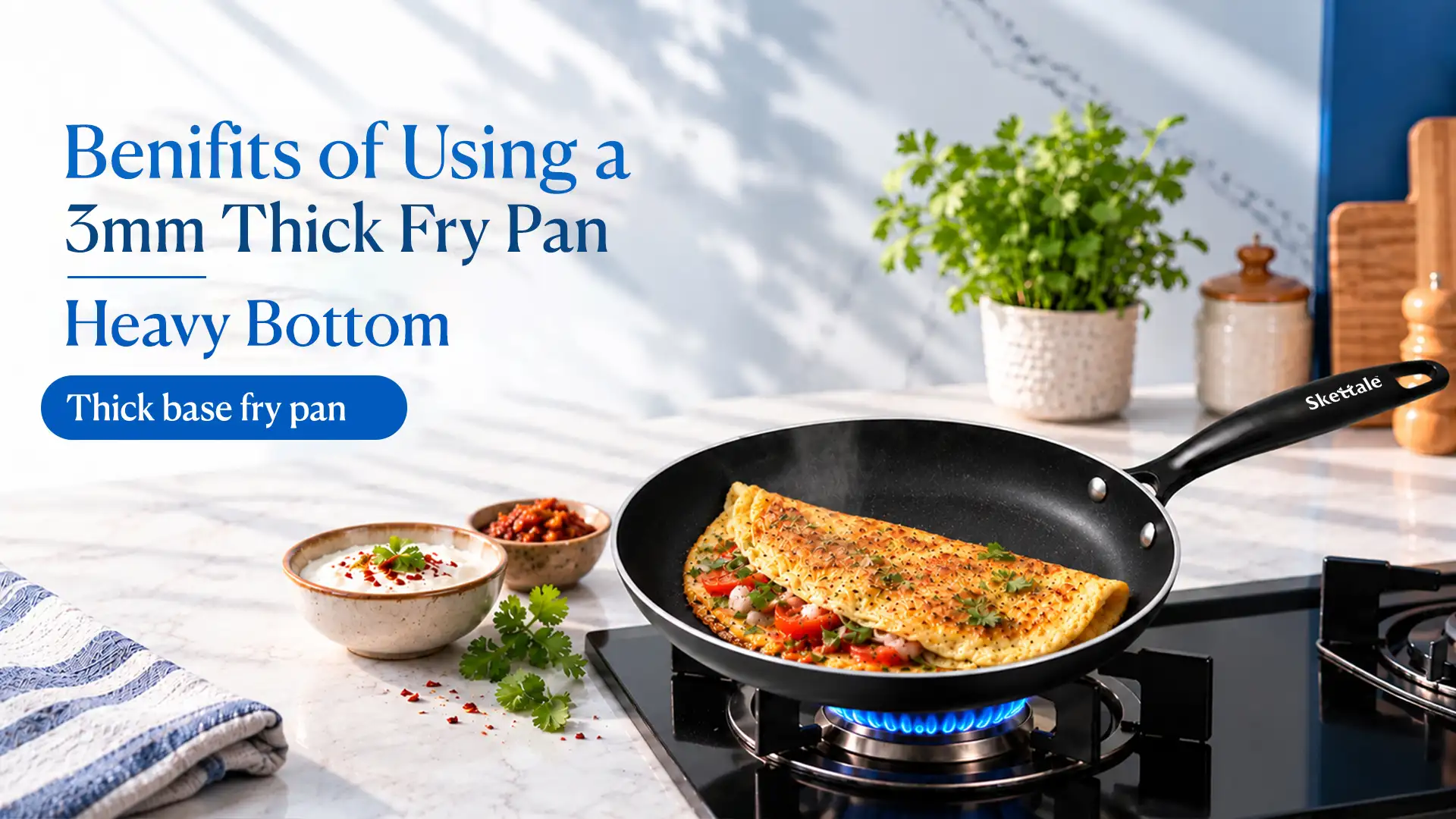
frying pan

The not-so-nice part

It’s heavy. Obviously. If someone at home has wrist pain, or an elderly person cooks in your kitchen, think twice. And forget about tossing the sabzi in the air as they do in videos.

It also heats up slower. You wait a minute extra. And it costs more, maybe Rs 1,200 to Rs 2,500 or so, but prices keep changing, so check.

This kind of pan isn’t for everyone, I’ll admit that. If you live alone and mostly make Maggi, a light pan is fine. Really.

Though I’d still pick the thick one. Old habit now.

Before you buy one

Look for the actual number in the listing. Some say “thick” and mean 2 mm. A proper 3mm thick frying pan will mention the thickness in the details. If it doesn’t, ask the seller or skip it.

Check the weight too. A medium size will be around 1 kg or more, I think. Hold it in the shop if you can, because what feels okay for ten seconds can feel terrible at 9 pm.

Look for the induction mark if you need it.

Don’t buy by looks. I did once. The red color looked lovely; it burned everything.

And look after it. No cold water on a hot pan, no steel wool, and no metal spoon if it’s non-stick. The same old rules everyone ignores, me included.

I think that’s all. Maybe I forgot something. Go to your kitchen, press the side of your pan, and see if it bends.

FAQs

1. Is a 3mm thick fry pan too heavy for daily use?

A bit heavy, yes. Most people get used to it in a week or two.

2. Does thicker always mean better?

Mostly for even heat, but the material and coating matter too.

3. Can I use a thick pan on induction?

Only if the base is magnetic. Check the label first.

4. How long does a thick pan last?

Several years with proper care. Thin ones usually give up much sooner.

5. Is it good for dosa?

It’s okay, but it heats slowly. A flat tawa is easier for dosa.


Visit Our Shop : Skettale world
Social Media : Skettale World Official
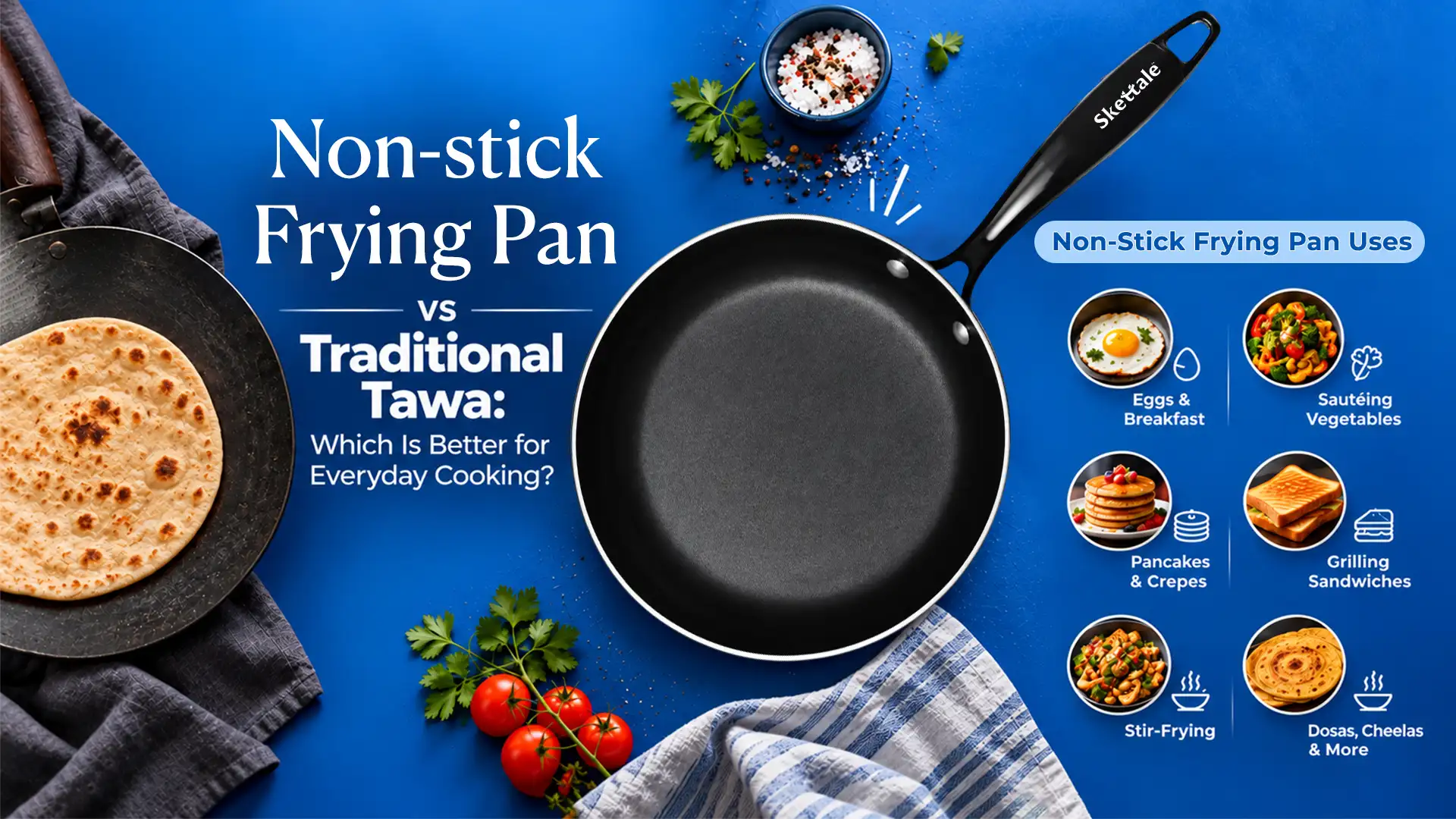
non stick frying pan vs tawa

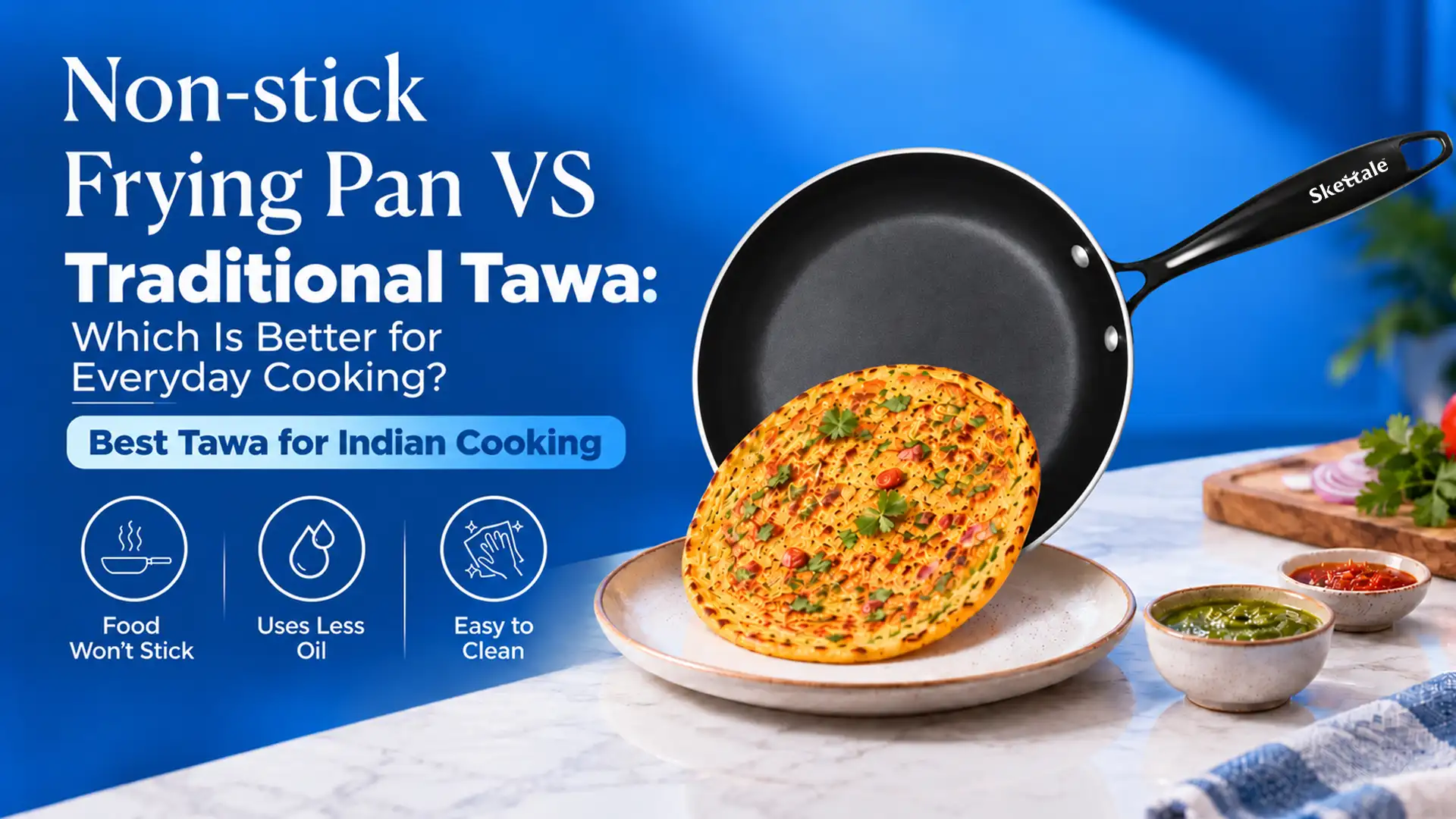
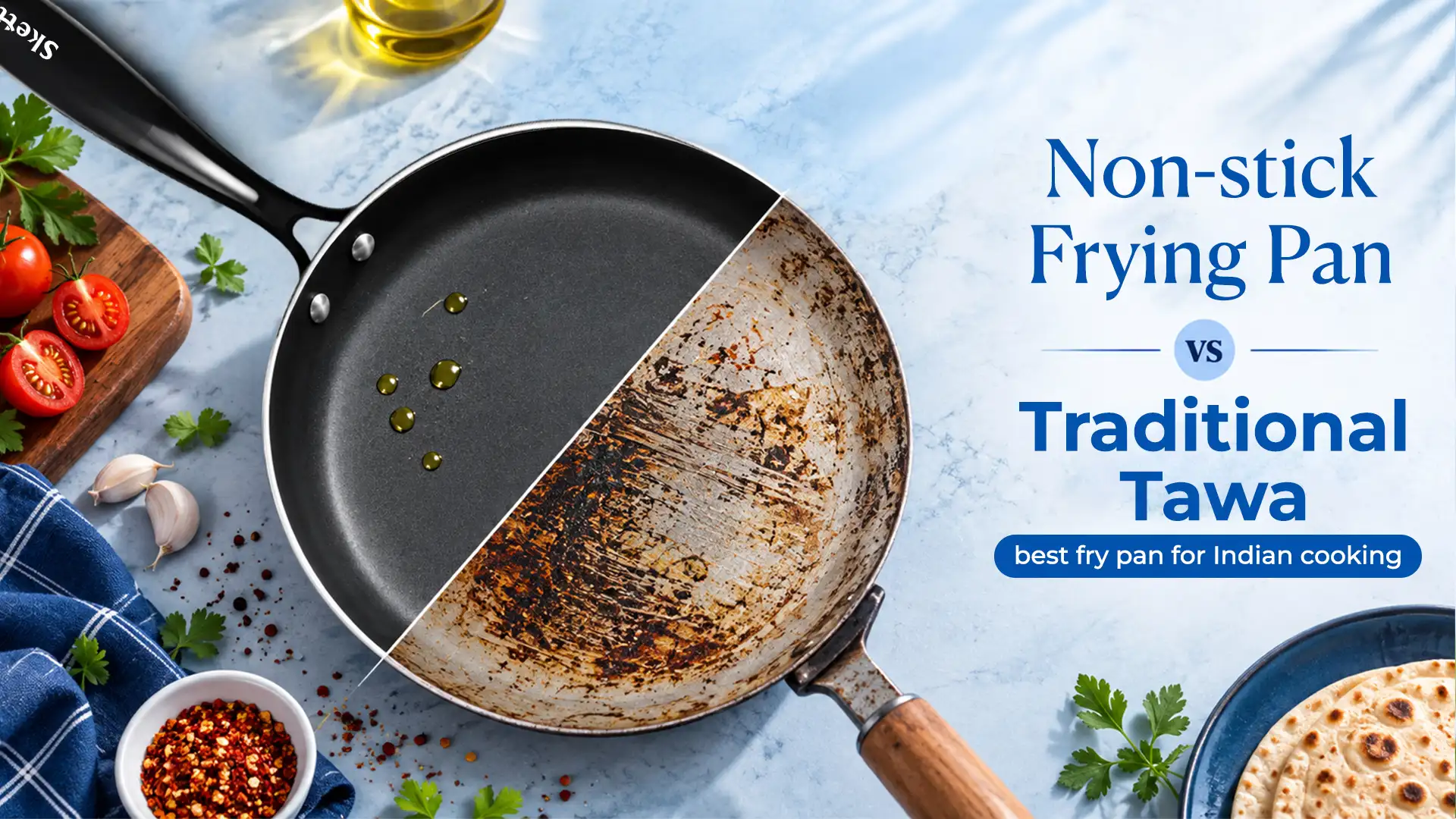
Non-Stick Frying Pan vs Traditional Tawa: Which Is Better for Everyday Cooking?

My kitchen has three tawas. Three. One is my dadi’s iron, one that nobody is allowed to wash with soap. One is a dented aluminium thing from my hostel days. The third is a non-stick one I bought after watching a reel.

And one frying pan, which I use for… I’m not even sure. That’s what started this whole non-stick frying pan vs tawa thought in my head.

So I’ll just think out loud here. Don’t expect a perfect answer.

Wait, are they even the same thing?

Sort of. Not really.

A tawa is wide and flat with very low edges. Roti, paratha, dosa, chilla. A frying pan has higher sides, so you can toss things around without half of it landing on the stove.

At home we say “pan” and “tawa” like it’s one word. It isn’t, but I get why. Both sit on the gas, both get a spoonful of oil.

So a non-stick frying pan vs a tawa isn’t really a fight. It’s more like, which one does your hand go to first in the morning.

What I actually cook (not what I say I cook)

Roti. Every day, no matter what. Then paratha, aloo sabzi, eggs, Sunday dosa if I’m in a good mood, and maggi when nobody’s watching.

Flat things go on the tawa. Things that need tossing, or a little gravy, go in the pan. That’s the rule in my head. I broke it yesterday and made chilla in the pan. It was fine. A bit thick.

In the non-stick frying pan vs tawa question, what you cook decides most of it. Not the brand, not the reel.

My mother-in-law thinks the whole frying pan vs traditional tawa debate is silly. She says Tawa does everything. She’s mostly right, and I hate saying that.

The old iron tawa, I’m biased

Heavy. Black. Takes forever to heat, then stays hot forever.

A roti on a good iron tawa puffs the way it should. I don’t know the science, it just does. Ask any aunty about the best tawa for Indian cooking, and she’ll say iron, no discussion, baat khatam.

But dosa on it? Scary. It sticks if you’re careless, and in monsoon it rusts if you even look at it wrong. Wipe it, rub it with a little oil, and keep it dry.

People also say you get a bit of extra iron in your food. True, a little. I wouldn’t pick it only for that.

In any non-stick frying pan vs tawa talk, iron always gets the nostalgia vote. Mine too, to be honest.

Non-stick, easy but fussy

Okay. Nonstick is the lazy person’s friend. I am that person.

Less oil, easy wash, eggs slide out, and dosa comes off without drama. When people ask me about non-stick frying pan uses, I say eggs, omelette, chilla, light sabzi, pancakes for kids, and quick fried rice. Gentle stuff.

The problem is the coating. High flame kills it. A steel spoon kills it. Leaving it empty on the burner while you answer a phone call kills it. I’ve done all three, so, yeah.

If it’s scratched and flaking, stop using it. Don’t be like my mom. Just buy a new one.

That’s why the non-stick frying pan vs tawa never has a clean winner for me. One is easy, the other is tough. Pick your problem.

best cookware for everyday cooking

So, roti. Non-stick frying pan vs tawa?

This is where it gets annoying.

You can make roti on non-stick. It works. But rotis need a fairly hot surface, and non-stick doesn’t love that, so you’re always a little nervous. Also, I feel the roti doesn’t cook the same. Maybe it’s in my head.

For roti, tawa wins. Iron, or a thick flat one.

For eggs, tawa loses. Eggs on iron can be done, I mean, people do it. I just don’t want that fight at 8 am.

Then there’s the non-stick tawa vs regular tawa thing, which is a different argument again. Non-stick tawa is nice for dosa and thin chilla. Regular tawa is nice for roti and paratha. I own both, and I’m not ashamed.

Gas, induction, the usual check

If you’re on induction, iron works nicely since it’s magnetic anyway. For non-stick, look for “induction base” written on it. Don’t assume.

On induction, the non-stick frying pan vs tawa choice changes a bit, because a lot of cheap tawas are thin and they warp. A warped base heats unevenly, and rotis come out half white, half burnt. Seen it.

On gas, honestly, almost anything works. Just watch the handle if it’s plastic.

Money, because everyone asks

Iron tawa is roughly Rs 400 to 900. Non-stick pans can be anywhere from Rs 600 to 1,500 or more. Prices keep changing, so check before you buy.

Iron can last for years, maybe a lifetime if you look after it. Non-stick lasts 2 to 3 years if you’re careful, less if you’re not.

So for some people, a non-stick frying pan vs. a tawa is really a money question. Iron is cheaper in the long run. But that logic falls apart if you never use it because it’s too heavy. My cousin’s wife bought a huge iron tawa, and it sits on the shelf. True story.

best tawa for Indian cooking

Who’s cooking matters too?

If you live alone, in a hostel or a PG, one non-stick pan is probably enough. Eggs, noodles, and a quick sabzi, done. You’re not making ten rotis.

If there’s a family of five, you’re making a lot of rotis daily. Then a good tawa matters more. Your wrist will tell you.

Older people at home usually want the iron one. Younger ones want non-stick. And you end up buying both anyway. Welcome to Indian kitchens.

Non-stick frying pan vs tawa arguments actually happen at home, I’m not joking. My dad says non-stick is “not real cooking.” Okay, Papa.

What I’d do if I started again

I’d buy one iron or thick tawa for roti and paratha, and one non-stick pan for eggs and lighter stuff. That’s my pick for the best cookware for everyday cooking, though someone will disagree, and that’s fine.

Not three tawas. I mean. I know.

I’d also stop using metal spatulas on non-stick. I say this every year.

Honestly, a non-stick frying pan vs. a tawa is not something you settle forever. You try, you see what your hands like, and you change.

And whichever you pick, look after it. An Rs 700 tawa treated well beats a Rs 2,500 one you’re careless with.

FAQs

1. Non-stick frying pan vs tawa: which is better for roti?

Tawa, preferably iron or a thick one. It handles high heat better.

2. Can I use a frying pan instead of a tawa?

For one or two rotis, yes. The high sides just get in the way.

3. Is an iron tawa better than a non-stick one?

For roti and paratha, mostly yes. For dosa and eggs, non-stick is easier.

4. How long does a non-stick pan last?

About 2 to 3 years with careful use. Less with metal spoons or a high flame.

5. Which one is cheaper in the long run?

Iron, because it can last for years if you keep it dry and oiled.

Visit Our Shop : Skettale world
Social Media : Skettale World Official