
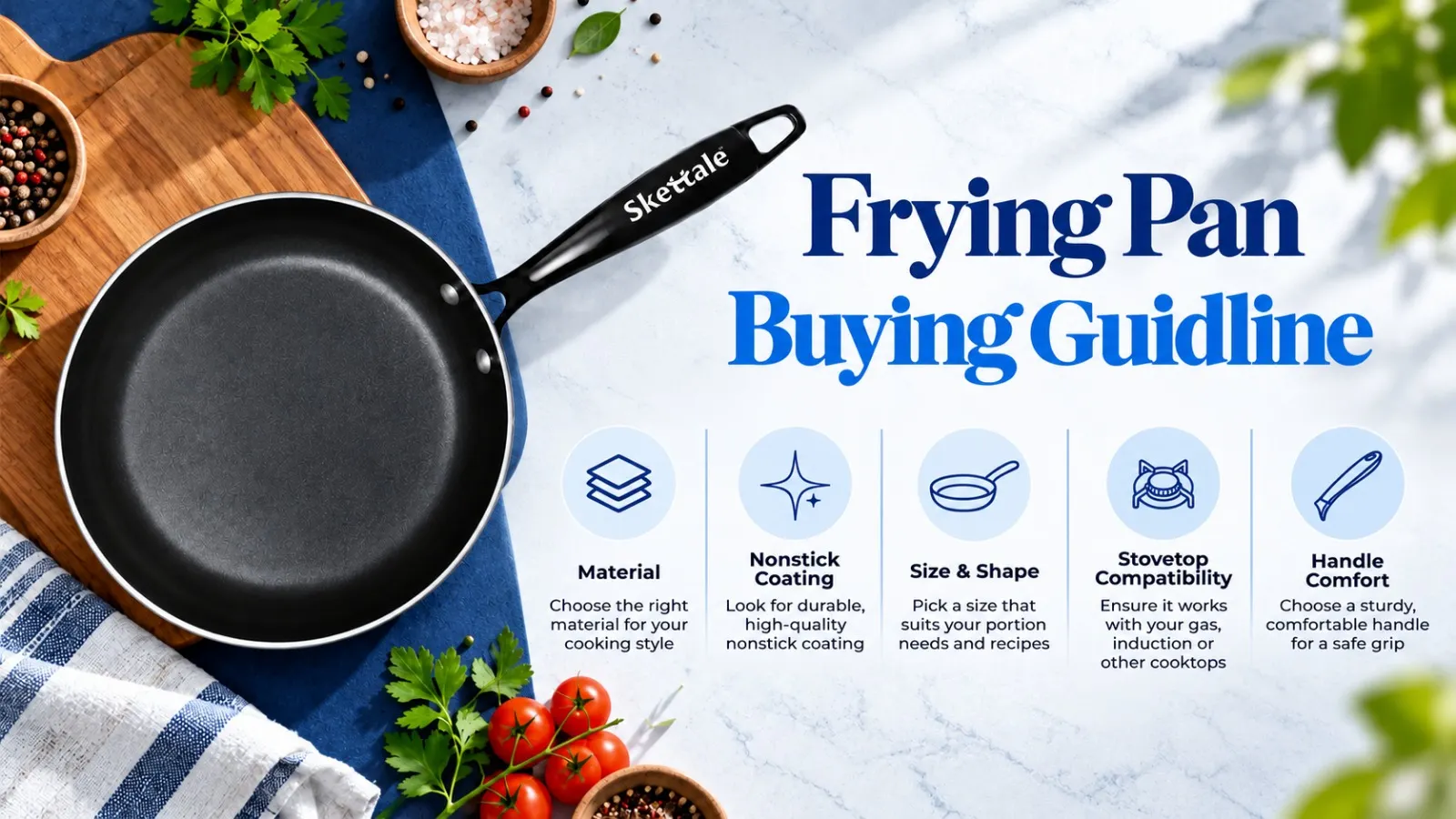
←
→
frying pan with glass lid

Fry Pan with Glass Lid: Benefits, Uses and Buying Tips

My sister called me last week, very excited, to tell me about her new pan. A pan. Like it was a phone launch.

I laughed at first. Then I went to her place, saw the frying pan with glass lid sitting on her stove, and honestly… I wanted one. So this is me thinking out loud. Not an expert. Just someone who cooks daily and burns things sometimes.

Why I never bothered with a lid before

For years my frying pan had no lid. I used a steel plate. Sometimes a random pot cover that didn’t fit and leaked steam from one side. It worked. Kind of. It also burned my fingers twice. Then I noticed my sabzi was taking forever, and the oil kept splattering all over the slab. My mom said, “Dhakkan lagao.” Fair. But which dhakkan? That’s when I started looking properly at pans that come with a proper lid. Not for style. Just to stop wiping the kitchen wall every night.

Steam does a lot of the work

This is the main thing. When you close the lid, steam stays inside and cooks the food from the top too, not just from the bottom. Aloo, beans, gobi, and even soft paneer. They cook faster, and you need less oil. Less water too, sometimes none. People ask me about the benefits of a frying pan with a lid, and I usually say faster cooking and less mess. That’s about it. Softer food also, maybe. With the glass lid on, I make aloo gobi with one spoon of oil and a tiny sprinkle of water. Earlier I needed double. The gas probably lasts a bit longer too. I can’t prove it.

Splatter, my real reason

Okay, honestly, the lid is mostly for the oil.

Tadka, mustard seeds jumping out like they’re escaping, and onions popping. All of it stays inside if you cover it quickly. I still get a few drops on my arm, but fewer. Tilt the lid a little if the steam is too much. Or use the small hole on top, which I’ll get to.

Glass or steel, I keep going back and forth

Steel lids are strong and don’t break. But you lift them every minute to check, and steam hits your face. Glass lets you look. Is the egg set? Is the onion browning? Is the milk going to boil over? You just see. That’s why a fry pan with a glass lid feels easier to me, especially when you’re doing three things at once. Though glass can crack if you drop it, and I do drop things. So.

Look for tempered glass. It’s usually written in the listing. If nothing is written, I’d hesitate.

What do I actually cook in it

Eggs, mainly. An omelette with the lid on gets fluffy on top without flipping. Parathas stay soft if you cover them for a minute. Reheating rice or leftover sabzi without drying it out. Maggi, obviously. Pulao for two, sometimes. Bhindi, bhurji, simple things like that. What I don’t do is deep fry with the lid on. Water drops fall into hot oil and… no. Never. A fry pan with a lid for Indian cooking is great for semi-dry stuff. Less great for crispy things, because moisture is the enemy of crisp. Lid off for those. I use this pan more than my kadhai now. Don’t tell my kadhai.

Non-stick or not

Most of what’s sold is a non-stick fry pan with a glass lid, because it’s light and needs less oil. That’s fine for eggs, chilla, and light sabzi. But non-stick has the usual problems. High flame, metal spoon, scratches. Same story as always. A lid doesn’t fix any of that. Stainless steel and hard-anodized ones with lids exist too, and they last longer. Heavier, a bit more sticking if you’re not careful. Pick what suits your hands.

Check the lid fits, seriously

This is where people mess up. I did. I bought a pan online, and the lid sat loosely, like a small hat on a big head. The lid should sit snug on the rim. Not rattling, not stuck. Try it in the shop if you can, or search the reviews for “lid doesn’t fit.” Size matters too. A 24 cm pan with a 22 cm lid is a bad deal. Check the number. Sounds obvious, I know. The pan is only as good as its lid.

Also, the steam vent, that small hole on top. Some people think it’s a defect. It’s not. It lets extra steam out so the lid doesn’t jump and water doesn’t boil over. Good thing, actually.

The knob, the handle, small things

The knob on top should be heat resistant. Bakelite is common, some are steel. A cheap plastic one warps and goes brown. I’ve seen it; it looks sad. Handle too. Riveted is better than screwed. And the pan should balance with the lid on. If it tips backwards when empty, hmm, not great. Check induction if you have induction. Magnetic base, written on the box. A pan that doesn’t work on your stove is just a fancy lid collection.

What should I spend

Rough numbers; prices keep changing. A decent one is around Rs 800 to Rs 2,000. Cheaper ones exist and usually have thin metal and a lid that doesn’t fit. Premium brands go to Rs 3,000 or more. I wouldn’t go crazy. For home use, mid-range is okay. When people search for the best frying pan with lid in India, they get ten different lists. Read recent reviews, especially the 2 and 3-star ones. They tell you what’s actually wrong. Check the base thickness as well. A thin base burns food no matter how nice the lid is.

Cleaning, because glass gets greasy

The glass gets foggy and oily with steam. Warm, soapy water, and a soft sponge. Let it cool first. Cold water on hot glass is how lids crack, I’ve heard. Haven’t tested it. Not planning to. The rim around the glass collects gunk. Clean it sometimes. Most people don’t. Me included. Keep the lid separate or put a cloth in between. Stacked in a hurry, lids get scratches and chips.

Some downsides, to be fair

It’s heavier with the lid on. Storage is annoying because lids take space. Glass can break, and then that’s money gone. And sometimes you don’t need the lid at all. Dosa, roti, crispy fries, and high-flame stir-fry. The lid just sits there looking at you. Some sellers list it as a frying pan with a glass lid like it’s a different product. It’s not. Same thing, different spelling. Still, I think a fry pan with a glass lid is worth it if you cook sabzi, eggs, and leftovers a lot. If you only make Maggi, skip. Or don’t, up to you.

Last thing

Check the lid first. Then the base. Then the colour, if you must. I bought my own, by the way. It’s on the stove right now with some bhindi inside. Smells good. Whatever you pick, it should make life a little easier, not give you one more thing to wash.

FAQs

Is a glass lid safe on the gas stove?

Yes, if it’s tempered glass. Don’t put the lid on a direct flame by itself.


Can I use the lid for deep frying?

No, water drops can make the hot oil splash. Keep it off.


Does the lid really save oil?

Yes, a little. Steam does part of the cooking, so you need less oil and water.


Why is there a hole in the lid?

It lets extra steam out so the lid doesn’t rattle or boil over.


Do these pans work on induction?

Only if the base is magnetic. Check the label before you pay.
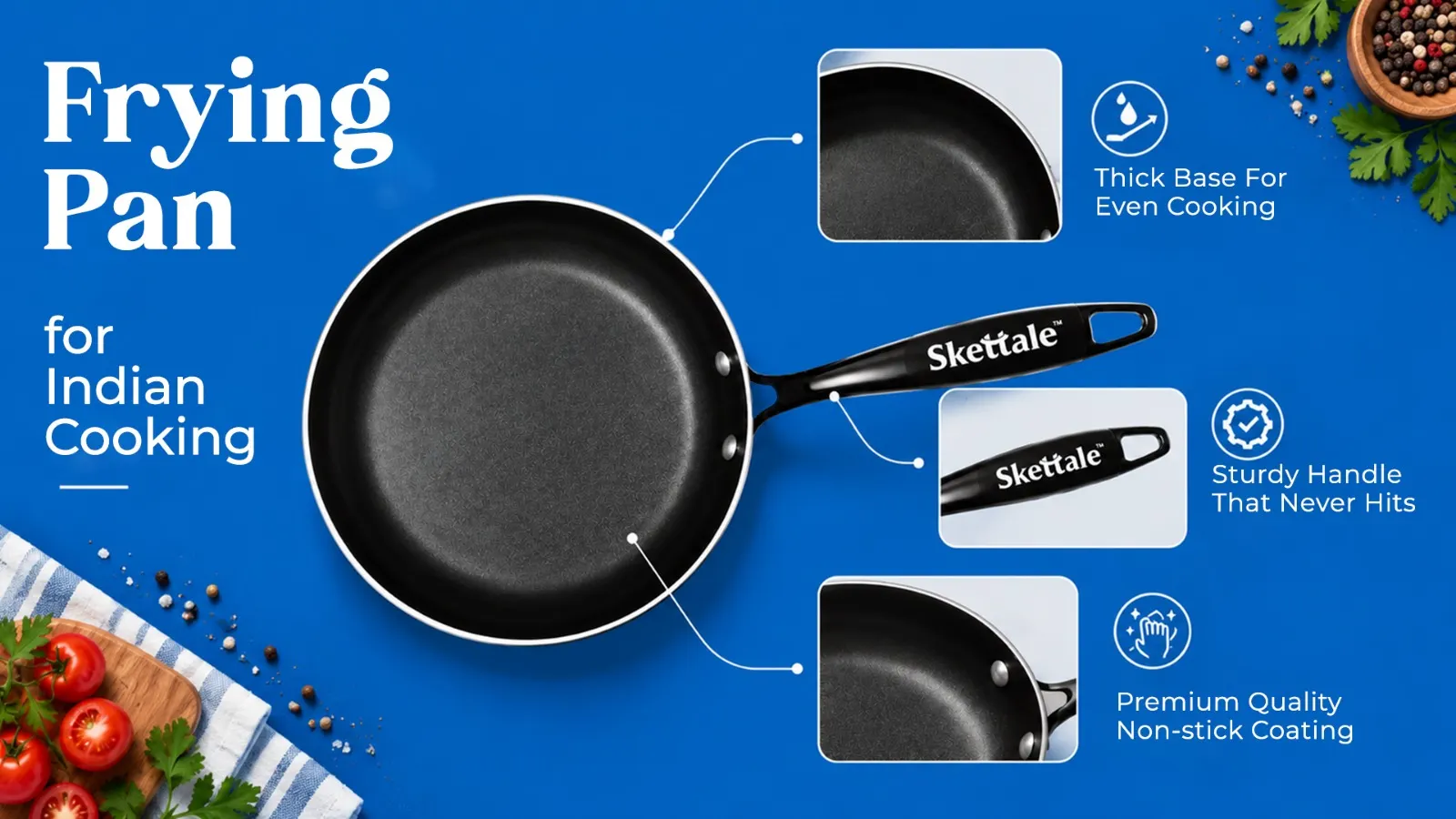
best frying pan in India

How to Choose the Best Frying Pan for Your Kitchen in India

Okay, so last month my mom’s old pan finally gave up. The coating was peeling like dry skin, and she still wanted to make “just one more” omelette in it. I said no. Firmly.

So I started looking for the best frying pan in India. Big mistake, because I got lost in about ten minutes.

Why is this so confusing, honestly

Every brand says theirs is the best. Every listing has 4.2 stars. Every reel says “this pan changed my life,” and then the guy burns an egg anyway. I don’t think there’s one single best frying pan in India. There, I said it. There’s only the one that suits your stove, your food, and how careful you are (or aren’t). Google “best frying pan in India” and you get ten lists, all different. Some are obviously paid. Some are fine. Hard to tell. But you still need to buy something, so here’s how I thought about it.

Material first, sorry

Boring, but it matters most. Non-stick is what most of us end up with. Light, needs less oil, and the dosa slides off nicely. The problem is the coating dies. Two or three years if you’re careful. Six months if someone in the house uses a steel spoon. You know who. Cast iron is the old loha kadhai type of thing. Lasts forever, honestly. But it’s heavy, needs seasoning, and rusts if you leave it wet overnight. My wrist hurt just lifting one in the shop. Stainless steel looks nice and feels serious. But food sticks if you don’t know your heat. I tried making eggs in one once. Never again, or maybe again, I don’t know. Hard anodized is kind of in the middle. Dark grey, tough, and doesn’t scratch easily. If you just want the best frying pan for everyday cooking, a hard-anodized one or a thick non-stick one is probably the safest start.

So for the best frying pan in India, material is where you begin. Then the rest.

Our cooking is not like their cooking

Most buying videos are made abroad, for people who search for steaks. We do something else.

A frying pan for Indian cooking has to handle tadka, jeera spluttering, masala sticking at the bottom, thin chilla, aloo fry, and sometimes all of it in one week on high flame. That’s a lot. That’s why the best frying pan in India isn’t the same as the best one in some American kitchen. Different food, different heat, different habits.

One thing, though. High flame and non-stick don’t go together. People do it anyway, me included. The coating gets damaged, and it smells weird. Medium flame is fine for most things, even if it feels slow.

Gas or induction: check this before you pay

This one is simple, but people forget.

If you have induction, the pan needs a magnetic base. It’s usually written on the box or the listing. If it’s not written, don’t guess. Ask or skip. Also, the base should be flat. A slightly curved base wobbles on induction and heats unevenly. A pan can be the best frying pan in India on paper and still be useless on your induction plate. Happened to my cousin. He was quite annoyed.

On gas, look at the handle. Plastic or Bakelite handles near a big flame will melt or go brown after some months. Check that the handle isn’t sitting right over the burner.

Size, and what you actually cook

Most Indian homes with 3 or 4 people are fine with a 24 cm or 26 cm pan. That’s big enough for sabzi and a couple of parathas. If you live alone, 20 cm is enough. Omelette, Maggi, whatever. A 30 cm pan on a small burner just heats the middle and ignores the edges. Whatever the best frying pan in India is for your family, it should fit your burner. Sounds obvious. People still skip it. Also pick it up if you can. Go to a shop and hold it. If it feels heavy in the shop, it’ll feel twice as heavy at 9 pm after a long day.

Thickness matters more than the price tag

A thin pan costing Rs 300 will heat up fast and burn your food in one corner. Then you blame yourself. A thicker base spreads the heat better. Not always, but mostly. Tri-ply or a heavy aluminium base is usually good. Price-wise, I’d say Rs 800 to Rs 2,000 is where you find decent non-stick or hard-anodized ones. Premium brands go higher, cast iron is somewhere around there too. These are rough numbers, prices keep changing, so check. The best frying pan in India doesn’t need to cost Rs 5,000. Sometimes it does cost more, and sometimes it’s just a fancy box.

For a plain best frying pan for home use, I’d stop at mid-range. Spend a little more only if you cook daily.

Handles, lids, small boring things

Riveted handles are stronger than the ones that are just screwed on. Screws loosen. I’ve seen it. A comfortable grip matters. A slightly long handle stays cooler. A glass lid is nice but not necessary for frying, honestly.

Also look at the inside. Is the coating even? Any rough patch? Return it if there is.

Brands, but carefully

Skettale, Prestige, Hawkins, Vinod, Pigeon, Wonderchef, Meyer, Tefal, and a few others are what most people talk about. They’re easy to find, and service is easier too.

But I won’t tell you the best frying pan in India is some particular brand. Read recent reviews, especially the 2 and 3-star ones. Those are more honest than the 5-star ones.

The warranty is okay, but it rarely covers coating damage from normal use. Don’t depend on it.

The mistakes I made (and you probably will too)

Metal spatula on non-stick. Done it. Cold water on a hot pan. Done that too, and the pan warped a little. Scrubbing with steel wool. Stacking pans without a cloth between them. Leaving an empty pan on the flame while I answer a phone call. You can buy the best frying pan in India and ruin it in a month. It’s usually not the pan’s fault. Wood or silicone spoons help. Soft sponge and warm soapy water, that’s all it needs. If you’re reading some frying pan buying guide like this one and feeling overwhelmed, relax. Nobody gets it perfect the first time. My first pan was terrible. People ask me how to choose a frying pan, and I say, start with your stove, then your food, then your budget. In that order. Brand and colour last.

Oh, and replace non-stick when you see deep scratches or flaking. Don’t keep using it because “it still works.” Mom, I’m looking at you. Honestly, the best frying pan in India is the one you actually look after. A Rs 1,200 pan treated well beats a Rs 4,000 one treated badly.

Anyway. Go check your stove type first. Then shop.

Visit Our Social Media Instagram : Skettale World

FAQs

Which is the best frying pan in India for beginners?

A medium-thickness, induction-friendly non-stick of 24 cm is easy to start with.


Is cast iron better than non-stick?

It lasts longer, but it’s heavy and needs care. Non-stick is easier for daily use.


How long does a non-stick pan last?

Around 2 to 3 years with careful use. Less if you use metal spoons or a high flame.


Can I use any frying pan on induction?

No, only ones with a magnetic base. Check the label before buying.


Should I buy a set or a single pan?

Single, to begin with. Buy more once you know what you actually cook.