My kitchen has three tawas. Three. One is my dadi’s iron, one that nobody is allowed to wash with soap. One is a dented aluminium thing from my hostel days. The third is a non-stick one I bought after watching a reel.
And one frying pan, which I use for… I’m not even sure. That’s what started this whole non-stick frying pan vs tawa thought in my head.
So I’ll just think out loud here. Don’t expect a perfect answer.
Wait, are they even the same thing?
Sort of. Not really.
A tawa is wide and flat with very low edges. Roti, paratha, dosa, chilla. A frying pan has higher sides, so you can toss things around without half of it landing on the stove.
At home we say “pan” and “tawa” like it’s one word. It isn’t, but I get why. Both sit on the gas, both get a spoonful of oil.
So a non-stick frying pan vs a tawa isn’t really a fight. It’s more like, which one does your hand go to first in the morning.
What I actually cook (not what I say I cook)
Roti. Every day, no matter what. Then paratha, aloo sabzi, eggs, Sunday dosa if I’m in a good mood, and maggi when nobody’s watching.
Flat things go on the tawa. Things that need tossing, or a little gravy, go in the pan. That’s the rule in my head. I broke it yesterday and made chilla in the pan. It was fine. A bit thick.
In the non-stick frying pan vs tawa question, what you cook decides most of it. Not the brand, not the reel.
My mother-in-law thinks the whole frying pan vs traditional tawa debate is silly. She says Tawa does everything. She’s mostly right, and I hate saying that.
The old iron tawa, I’m biased
Heavy. Black. Takes forever to heat, then stays hot forever.
A roti on a good iron tawa puffs the way it should. I don’t know the science, it just does. Ask any aunty about the best tawa for Indian cooking, and she’ll say iron, no discussion, baat khatam.
But dosa on it? Scary. It sticks if you’re careless, and in monsoon it rusts if you even look at it wrong. Wipe it, rub it with a little oil, and keep it dry.
People also say you get a bit of extra iron in your food. True, a little. I wouldn’t pick it only for that.
In any non-stick frying pan vs tawa talk, iron always gets the nostalgia vote. Mine too, to be honest.
Non-stick, easy but fussy
Okay. Nonstick is the lazy person’s friend. I am that person.
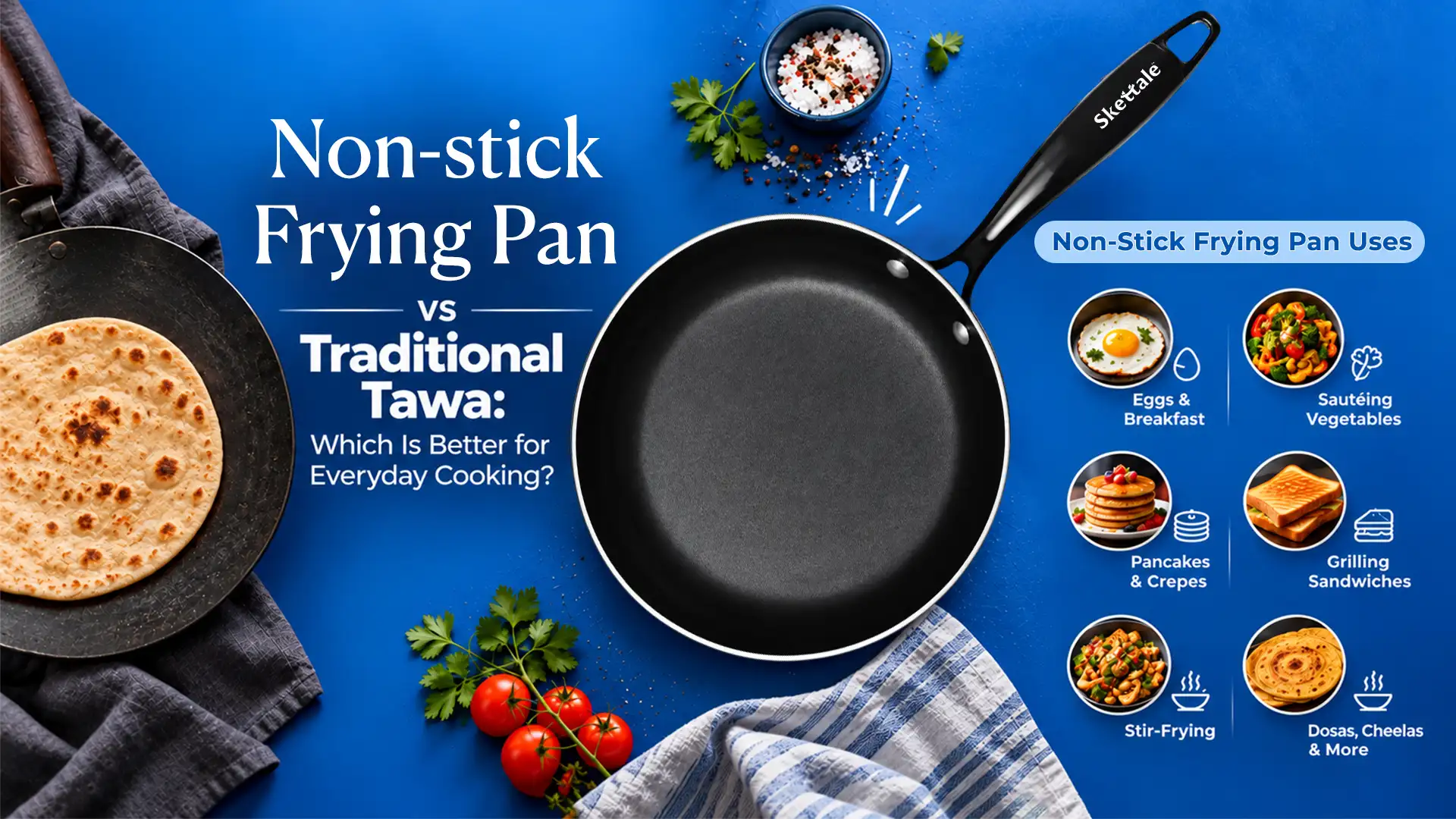
Less oil, easy wash, eggs slide out, and dosa comes off without drama. When people ask me about non-stick frying pan uses, I say eggs, omelette, chilla, light sabzi, pancakes for kids, and quick fried rice. Gentle stuff.
The problem is the coating. High flame kills it. A steel spoon kills it. Leaving it empty on the burner while you answer a phone call kills it. I’ve done all three, so, yeah.
If it’s scratched and flaking, stop using it. Don’t be like my mom. Just buy a new one.
That’s why the non-stick frying pan vs tawa never has a clean winner for me. One is easy, the other is tough. Pick your problem.
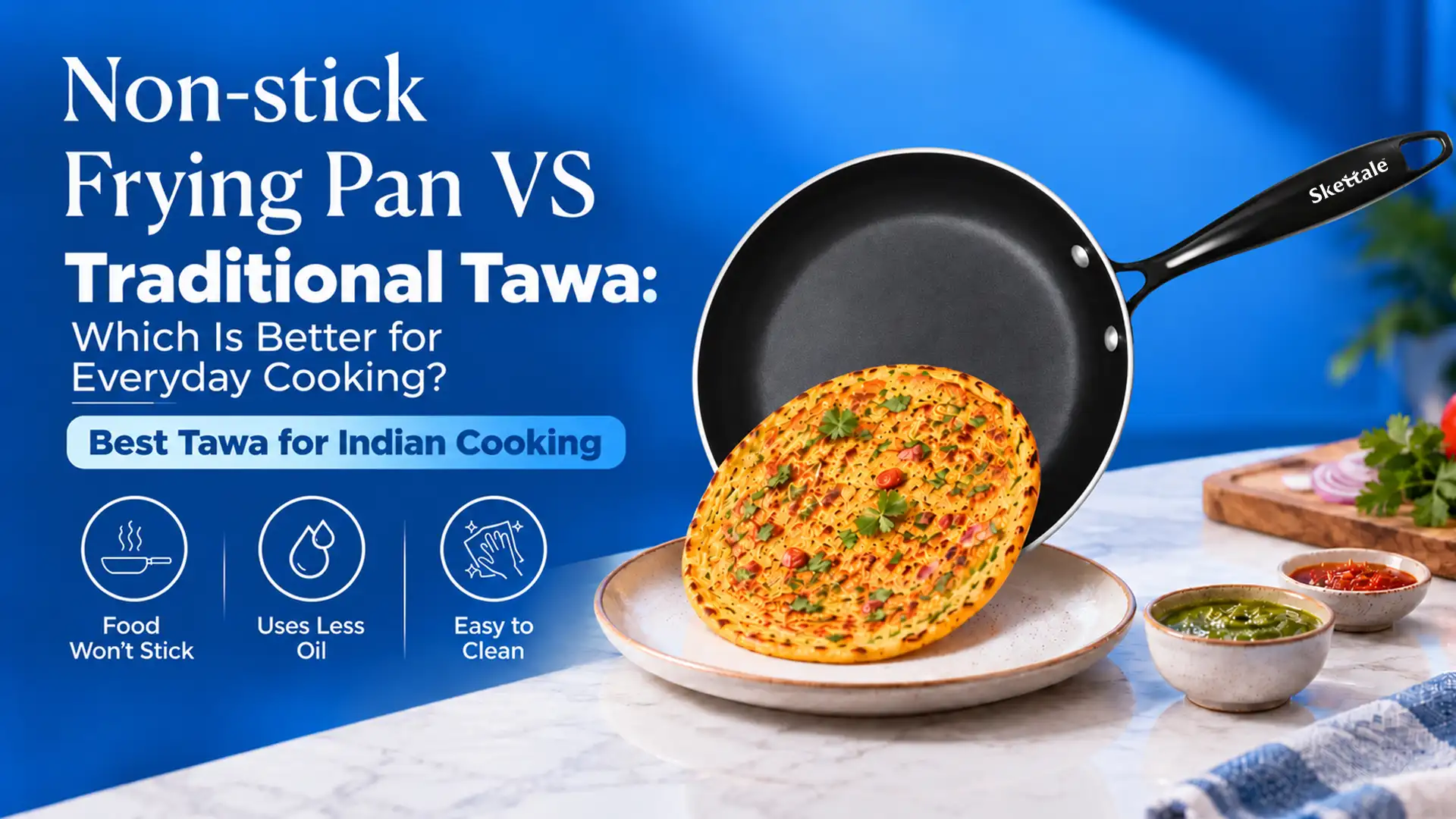
So, roti. Non-stick frying pan vs tawa?
This is where it gets annoying.
You can make roti on non-stick. It works. But rotis need a fairly hot surface, and non-stick doesn’t love that, so you’re always a little nervous. Also, I feel the roti doesn’t cook the same. Maybe it’s in my head.
For roti, tawa wins. Iron, or a thick flat one.
For eggs, tawa loses. Eggs on iron can be done, I mean, people do it. I just don’t want that fight at 8 am.
Then there’s the non-stick tawa vs regular tawa thing, which is a different argument again. Non-stick tawa is nice for dosa and thin chilla. Regular tawa is nice for roti and paratha. I own both, and I’m not ashamed.
Gas, induction, the usual check
If you’re on induction, iron works nicely since it’s magnetic anyway. For non-stick, look for “induction base” written on it. Don’t assume.
On induction, the non-stick frying pan vs tawa choice changes a bit, because a lot of cheap tawas are thin and they warp. A warped base heats unevenly, and rotis come out half white, half burnt. Seen it.
On gas, honestly, almost anything works. Just watch the handle if it’s plastic.
Money, because everyone asks
Iron tawa is roughly Rs 400 to 900. Non-stick pans can be anywhere from Rs 600 to 1,500 or more. Prices keep changing, so check before you buy.
Iron can last for years, maybe a lifetime if you look after it. Non-stick lasts 2 to 3 years if you’re careful, less if you’re not.
So for some people, a non-stick frying pan vs. a tawa is really a money question. Iron is cheaper in the long run. But that logic falls apart if you never use it because it’s too heavy. My cousin’s wife bought a huge iron tawa, and it sits on the shelf. True story.
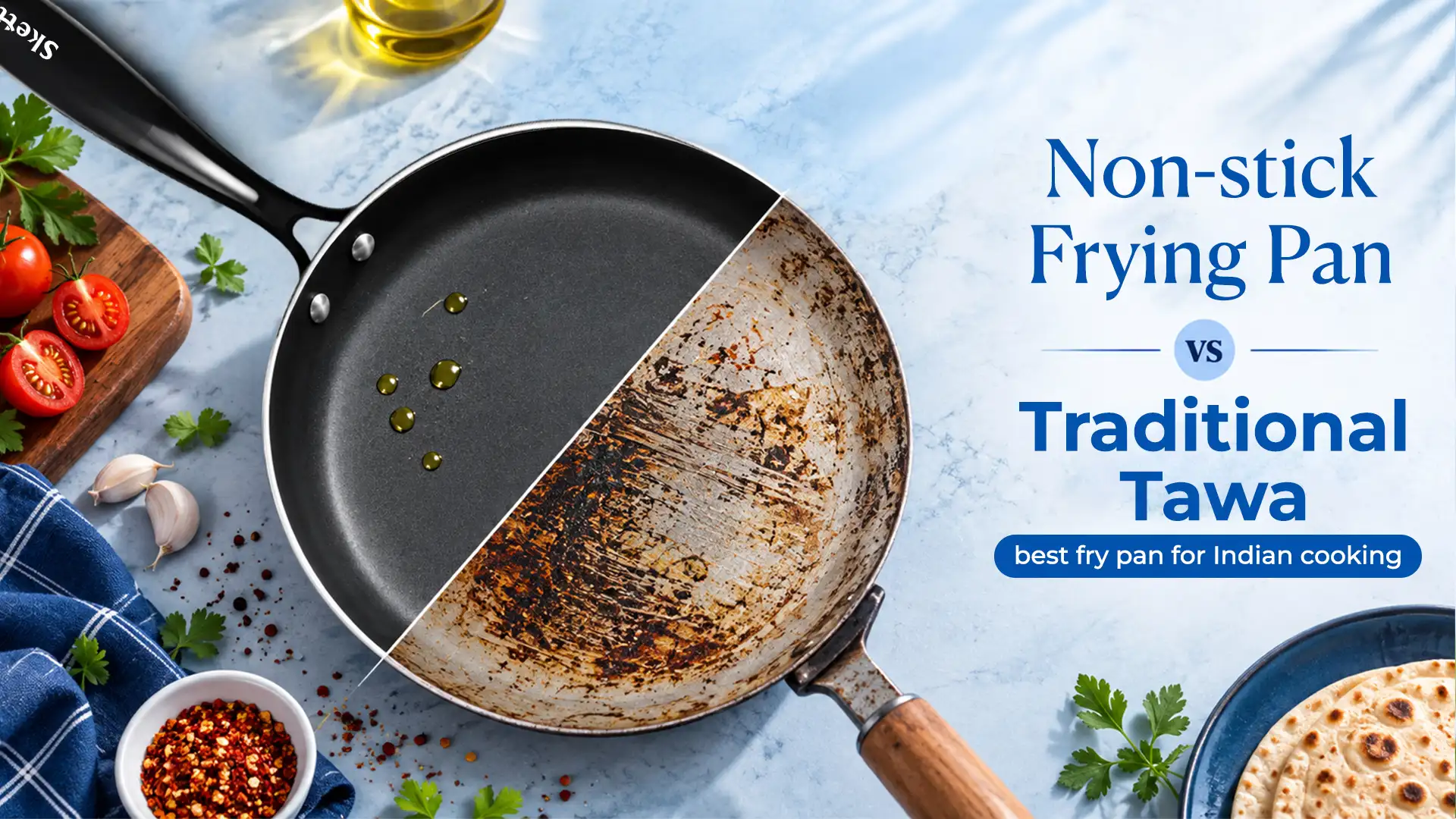
Who’s cooking matters too?
If you live alone, in a hostel or a PG, one non-stick pan is probably enough. Eggs, noodles, and a quick sabzi, done. You’re not making ten rotis.
If there’s a family of five, you’re making a lot of rotis daily. Then a good tawa matters more. Your wrist will tell you.
Older people at home usually want the iron one. Younger ones want non-stick. And you end up buying both anyway. Welcome to Indian kitchens.
Non-stick frying pan vs tawa arguments actually happen at home, I’m not joking. My dad says non-stick is “not real cooking.” Okay, Papa.
What I’d do if I started again
I’d buy one iron or thick tawa for roti and paratha, and one non-stick pan for eggs and lighter stuff. That’s my pick for the best cookware for everyday cooking, though someone will disagree, and that’s fine.
Not three tawas. I mean. I know.
I’d also stop using metal spatulas on non-stick. I say this every year.
Honestly, a non-stick frying pan vs. a tawa is not something you settle forever. You try, you see what your hands like, and you change.
And whichever you pick, look after it. An Rs 700 tawa treated well beats a Rs 2,500 one you’re careless with.
FAQs
1. Non-stick frying pan vs tawa: which is better for roti?
Tawa, preferably iron or a thick one. It handles high heat better.
2. Can I use a frying pan instead of a tawa?
For one or two rotis, yes. The high sides just get in the way.
3. Is an iron tawa better than a non-stick one?
For roti and paratha, mostly yes. For dosa and eggs, non-stick is easier.
4. How long does a non-stick pan last?
About 2 to 3 years with careful use. Less with metal spoons or a high flame.
5. Which one is cheaper in the long run?
Iron, because it can last for years if you keep it dry and oiled.
Visit Our Shop : Skettale world
Social Media : Skettale World Official